After his victory at the Battle of Hastings in 1066, the new King William gave most of the lordship of Somerton to his half-brother, the turbulent Bishop Odo of Bayeux, who features in the Bayeux Tapestry - which Odo may indeed have commissioned.
External Resource
The Bayeux Tapestry - the panoramic embroidery recording the Norman Conquest - is held at the Musée de la Tapisserie de Bayeux in Normandy. Odo of Bayeux, who held the lordship of Somerton, features prominently, including in the feast scene showing Wadard (mounted left), who became effective Lord of the Manor here. The images are under copyright and cannot be reproduced here, but the full tapestry can be explored online: Bayeux Museum - Explore the Tapestry Online →
In 1086, in the Domesday Book, he is recorded as sharing Somerton with Miles Crispin, the son-in-law of Robert d'Oilly, the Constable of Oxford Castle. The under-tenant of the whole lordship was Wadard, a close associate of Odo who also appears in the Bayeux Tapestry.
The Battle of Hastings scene from the Tapestry shows Bishop Odo encouraging his followers with a club rather than a sword - as clerics were not supposed to shed blood. To view the scene, visit the Bayeux Museum online viewer.
The Domesday entry records Somerton as Sumertone. The manor was assessed at nine hides of land, with enough capacity for nine plough teams. Within the lord's demesne were two ploughs and a single serf, while the wider village population consisted of seventeen villeins and nine bordars working seven additional ploughs. There was a mill rendering twenty shillings and four hundred eels, forty acres of meadow, and one hundred and fifty-six acres of pasture. The value of the manor had increased from nine pounds before the Conquest to twelve pounds by the time of the survey.
What appears at first glance to be a dry administrative record is, in fact, a detailed portrait of a working medieval community - its people, its land, and the rhythms of life that would shape Somerton for centuries to come.
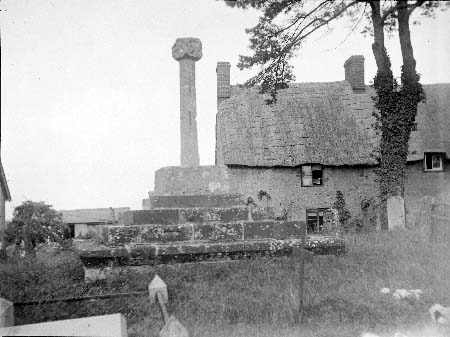
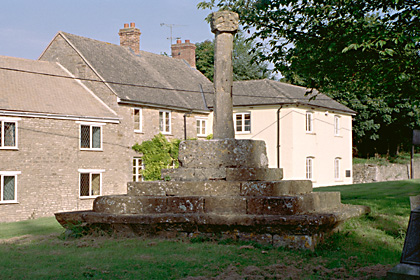
There is no evidence for the origin of the castle at Somerton but it seems reasonable to speculate that it may go back at least to the early days after the Conquest - perhaps little more than a stockade, commanding the track leading across the river to North Aston and Deddington. The original church building on the current site is believed to have been erected within eight years of the Conquest, though the only surviving element of that structure is the blocked-up Norman door in the south wall. The date of the preaching cross on the north side of the church is also obscure, but it is clearly medieval. Such crosses often go back to Saxon times and were frequently built on pagan sites.
After Odo's disgrace and banishment in 1087, Somerton was granted to the Arsic family and became part of the Barony of Cogges, near modern Witney.
- Somerton Village History Project archive
New Research, 2026
Added October 2026. Each item below has been checked against the source named with it. Where only a transcript or a later account has been seen, that is said.
The men who held Somerton land before 1066
Domesday Book does not describe Somerton as a single holding. It has three entries. One is the land of Bishop Odo, held by Wadard. The other two are the land of Miles Crispin, both held in 1086 by a man called Reginald.
Those two Crispin entries also name who held the land in 1066, before the Conquest. One was Brictric, identified in the modern Domesday databases as Brictric of Waddesdon. The other was Ketil, spelt Ketel in the original.
Holding land is not the same as living on it. Ketil and Brictric may never have set foot in Somerton. They are, though, the earliest people we can name with a link to it.
Sources: Open Domesday, Somerton (Phillimore Oxfordshire 7,10; 35,14; 35,34); Prosopography of Anglo-Saxon England, Domesday, which warns that some identifications of individuals are provisional.
Northbrook, the hamlet nobody can find
Domesday Book has a fourth place to add to the three Somerton entries: a settlement called Northbrook. The Victoria County History calls its site "unidentified", and it still is.
By 1220 Northbrook was being counted in with Somerton's twelve carucates, and later records talk about "the part of the vill of Somerton called Northbrook". Two carucates "in Somerton and Northbrook" belonged to the Arsic barony, and the tithes from Northbrook's demesne went with Ardley manor. After that it fades out of the records, the way small places do.
So somewhere in the parish there was once a cluster of houses with its own name. Nobody has found it on the ground.
Sources: M. D. Lobel (ed.), Victoria County History of Oxfordshire, vol. 6 (1959), Somerton. A later account; the medieval documents it cites have not been seen.