St James' Church Bells
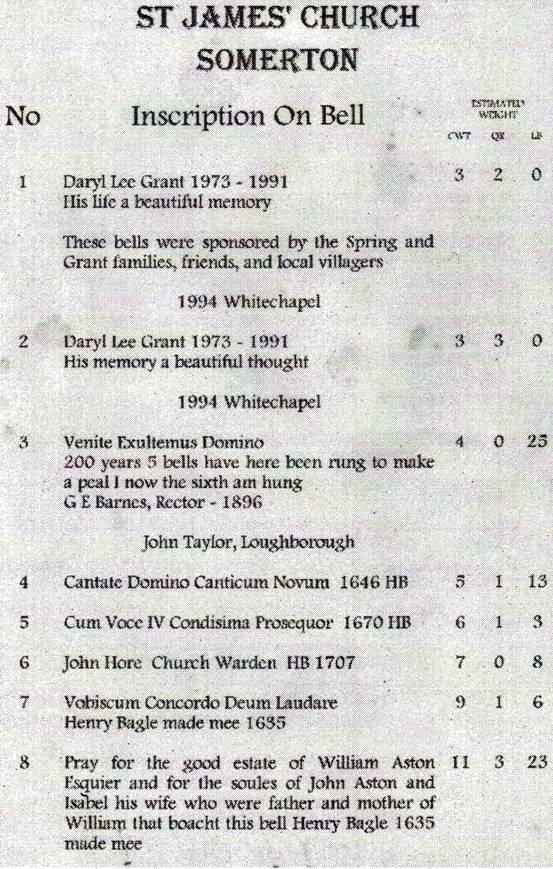
Up until the 1890's there were only five bells at Somerton, all of them ancient and mostly dating from the first half of the 17th century. In 1896 a sixth bell was cast by Messrs J Taylor & Co and hung by Messrs White. This was added by the then Rector George Barnes as you will seem from the list of inscriptions.
All the bells were re-hung by Messrs J Taylor & Co in 1931 into a steel frame. With considerable forethought provision was made at the same time to hang two further bells which you will see as numbers 1 and 2 on the inscription list.
These two bells were cast at Whitechapel in 1993 and put into the two vacant pits for augmentation to a ring of eight bells which were dedicated by The Venerable J Hewitt Wilson in 1994.
The ringing bells were installed in the tower in the 17th century. Originally there were 4, then 2 were added in the 19th century, followed by another 2 in the 20 th century (donated by the Grant family, in remembrance of Shirley Grant's son).
The original timber bell frame was replaced in the early 20th century for a steel frame.
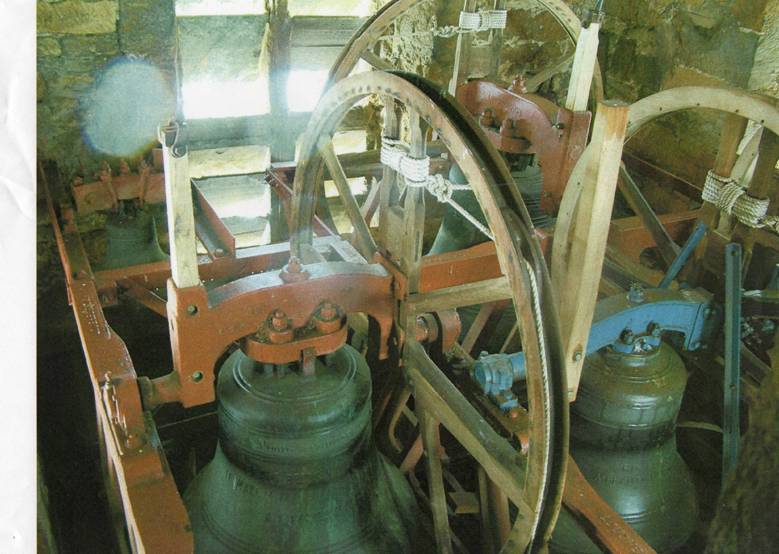
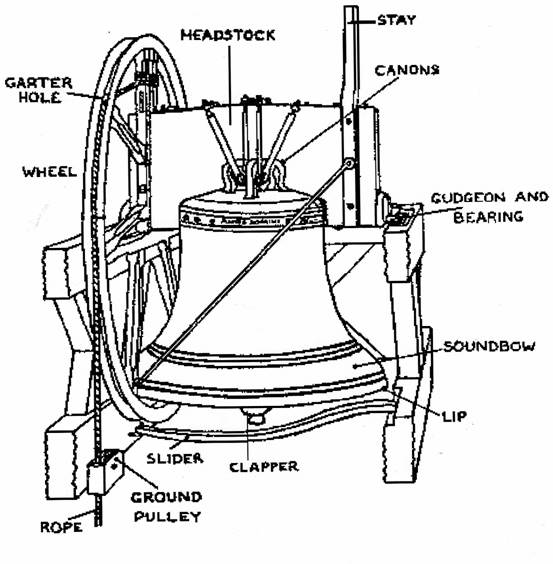
The tower dates from about the 14th century, and is constructed of local lime and Horton stone. The battlements and pinnacles at the top of the tower were added in the 15th century, along with the gargoyles. The louvers were probably added in the 16 th or 17th century, when the single chiming bell was added.
Church bells were rung to announce a death. At Somerton this was done as soon as a death occurred at one time, by the early 20th century only between sunrise and sunset as was customary elsewhere.
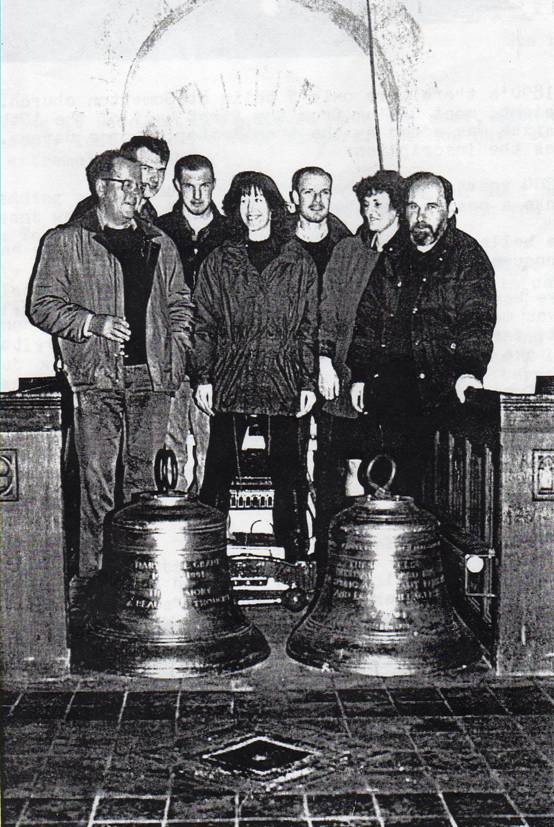
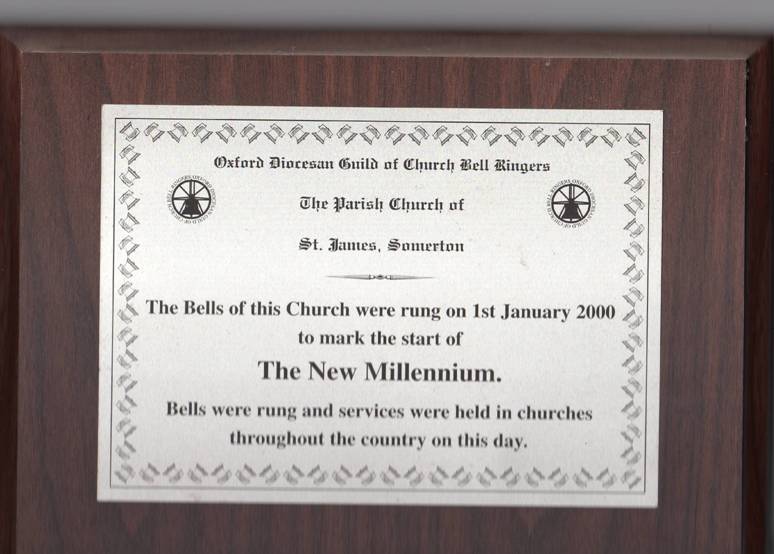
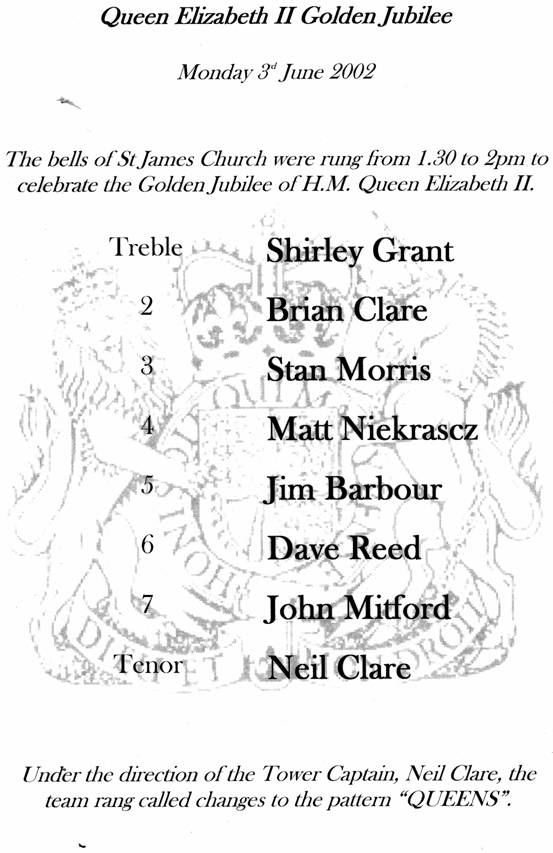
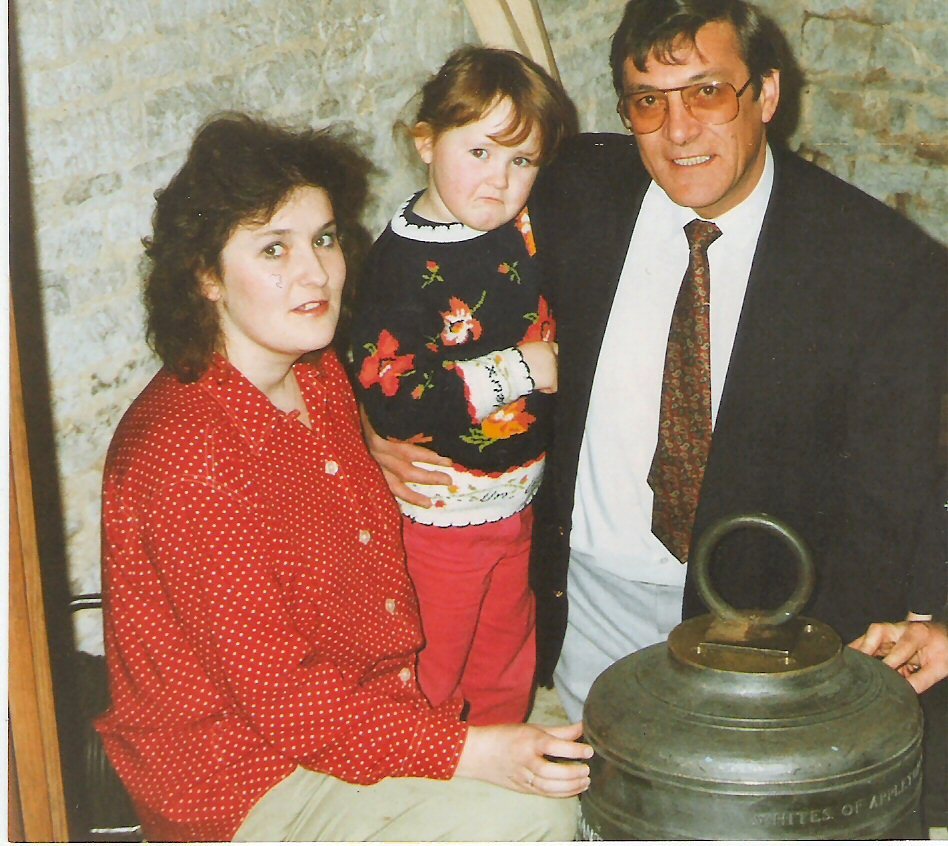
Ringing today
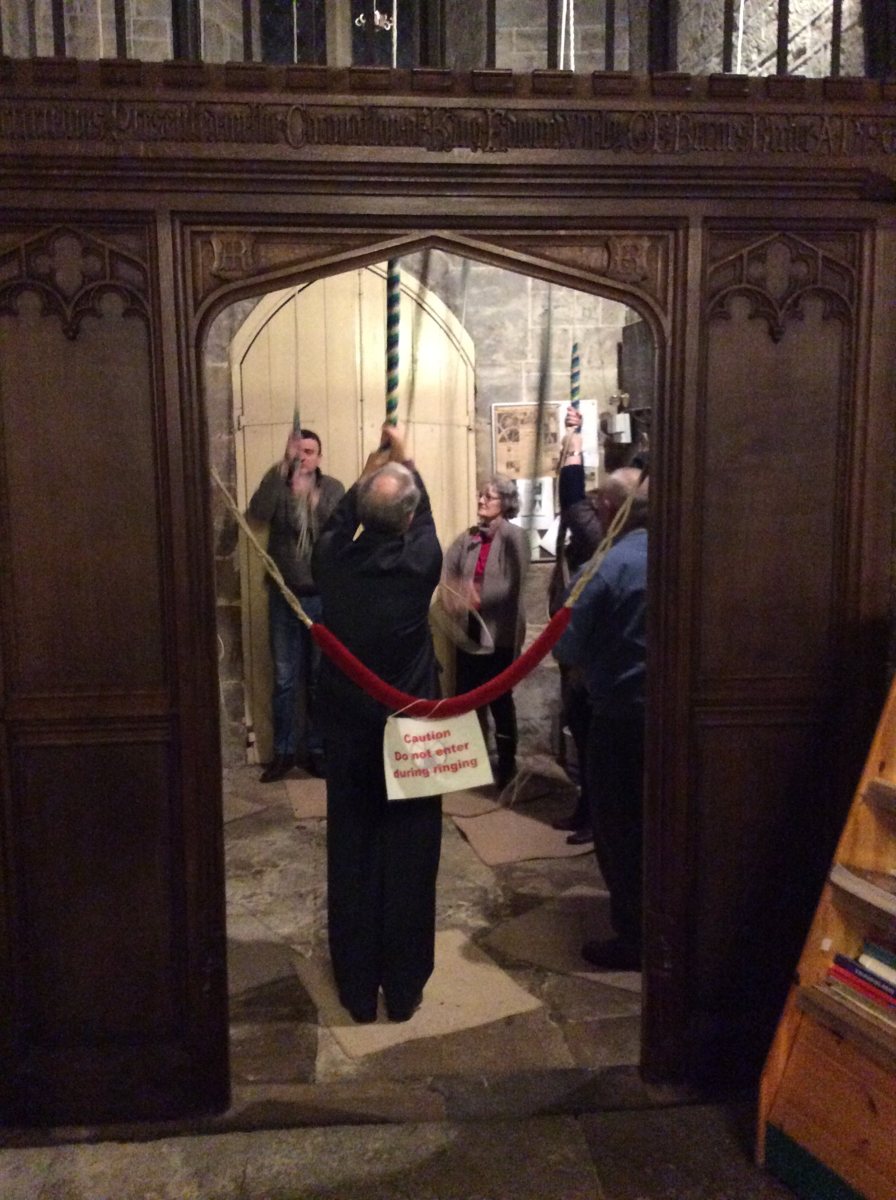
The bells are still rung at St James's. These pictures were taken from the doorway of the ringing chamber at the foot of the tower, looking through the carved wooden tower screen.
New Research, 2026
Added October 2026. Each item below has been checked against the source named with it.
Who cast the bells
Five of our eight bells came from one family, the Bagleys of Chacombe, a few miles north of Banbury. Henry Bagley, the first of three bellfounders of that name, cast the two heaviest in 1635, another in 1646 and another in 1670. A later Henry Bagley, the third, added one in 1707.
- Tenor (8): 1635, Henry I Bagley, 11 cwt 3 qr 23 lb, in F
- 7: 1635, Henry I Bagley
- 6: 1707, Henry III Bagley
- 5: 1670, Henry I Bagley
- 4: 1646, Henry I Bagley
- 3: 1896, John Taylor & Co
- 1 and 2: Whitechapel Bell Foundry (Dove's Guide gives 1994; cast in 1993 and dedicated in 1994, as above)
There is a ninth bell too, which nobody rings with the others: a small sanctus bell of about 1650, half a hundredweight, by James Keene.
Sources: Dove's Guide for Church Bell Ringers, Somerton, St James. The inscriptions on the bells themselves have not been rechecked for this note.
Four ringers in 1611
Our oldest surviving bells were cast in 1635, but the tower had bells before that. When Harrye Wysedome, a Somerton husbandman, made his will on 25 March 1611, he asked to be buried inside the church and left two shillings "to four ringers to ring at my burial". He also left three shillings for the poor of Somerton, to be given out on the day he was buried, and another five shillings for the poor. The will was proved on 6 April 1611.
So there were bells to ring in 1611, and men to ring them. We do not know how many bells there were, what became of them, or whether any of their metal went into the bells cast by Henry Bagley from 1635 onwards. Old bells were often recast or replaced, and the 1611 bells may simply have worn out or cracked.
Source: Oxfordshire Family History Society, will of Harrye Wysedome of Somerton, 1611 (Oxfordshire History Centre W.194.201). A transcript; the original has not been seen.