Somerton, Oxfordshire · A Village History
From the Norman Conquest to the present day — the story of a small Oxfordshire village, its church, its people, and the lives they lived.
About Somerton
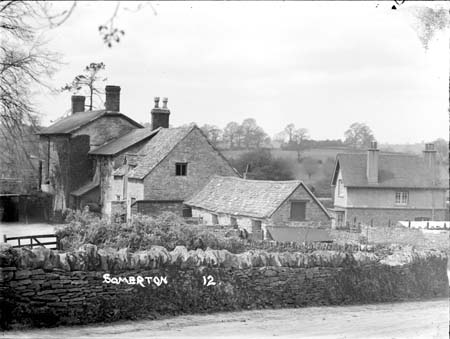
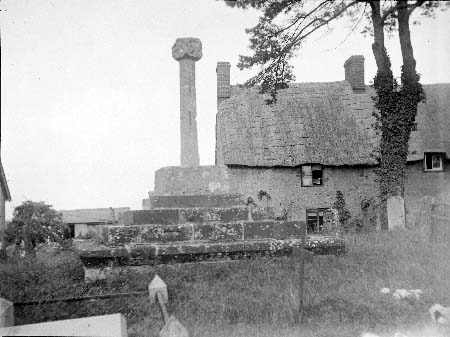
Somerton stands on a limestone escarpment above the Cherwell valley, about midway between Banbury and Oxford. It has never been a large village — its population has hovered around three hundred for two centuries — but its history is disproportionately rich: Norman lords, recusant Catholics sheltered by the Fermor family for three generations, a railway that brought the world to its doorstep, and a church that contains remarkable monuments from every century between the eleventh and the sixteenth.
This site preserves the research of the Somerton Village History Project, compiled from the work of Rosemary Arnold, Alice Bowmaker, and many others who cared enough to find it out.
Key moments
Somerton is recorded in the Domesday Book. The village's name reveals its oldest purpose — summer pasture for livestock kept on the tableland above.
Robert Arsic dies without male heirs. The round Norman piers in St James's — still standing — date from their century. The division shapes Somerton's history for the next three hundred years.
The stone reredos behind the altar of St James's is carved — the Last Supper in splendidly lively style. Hidden from the Puritans, it is restored in 1822 and remains one of the finest pieces of medieval carving in Oxfordshire.
Francis Lovell — Richard III's closest ally, who bore the third sword at his coronation — is attainted after Bosworth. The Crown holds Somerton for 25 years. Lovell was last seen swimming the Trent on horseback.
William Fermor acquires the full manor and builds a new house. The family remain staunch Catholics through the Reformation, protecting recusants for two centuries. Their tombs fill the south chapel of St James's.
The Somerton Enclosure Act is passed. Open fields that had been farmed in common strips since the medieval period are consolidated and hedged. The landscape of the parish is transformed almost overnight.
The Oxford Canal is completed. Somerton Deep Lock — No. 34 — is one of the deepest as-built locks in England, with a rise of approximately twelve feet.
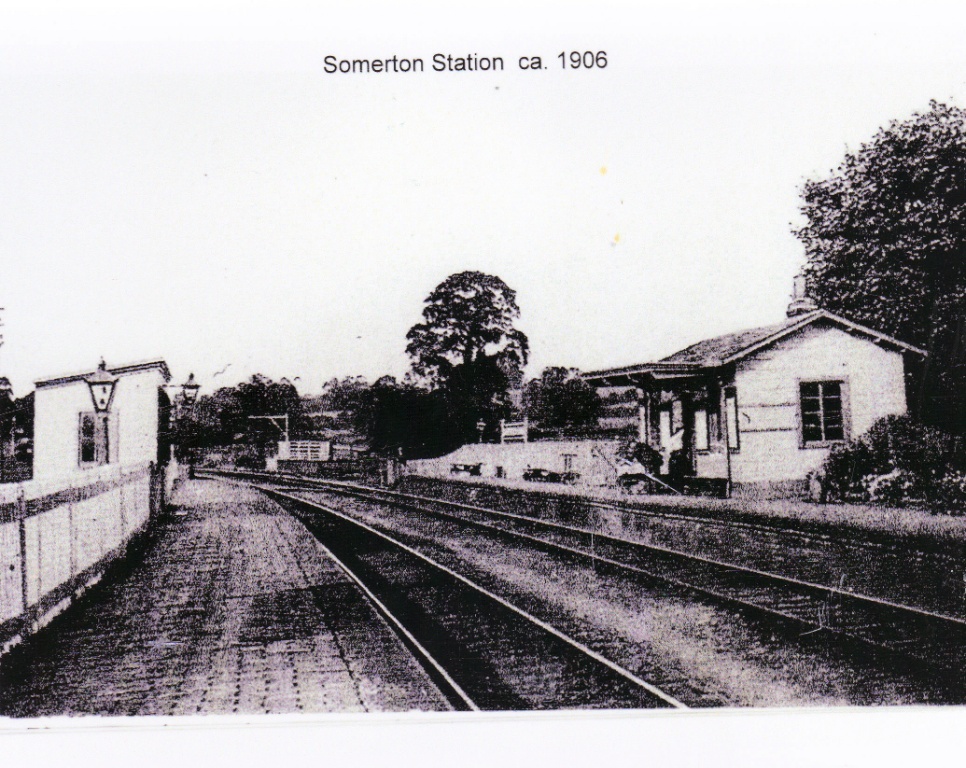
Somerton Station opens on the GWR line. Lord Jersey had to be promised a station in exchange for his agreement to the route. Queen Victoria's royal train passes through three or four times a year.
The National School is rebuilt and enlarged. At its peak the school rolls more than sixty children, drawn from Somerton and the surrounding farms. The 1896 class photograph survives.
Seven men from Somerton do not come home. John Henry Allen, Frederick Hollis, Albert A G Lewis, Harry Stevens, William Watts, Henry James Watts, and F Harry Varney Wise — their names are on the memorial plaque in St James's.
Fritwell & Somerton Station sees its last train on Saturday, 31 October 1964. Albert Fox: "12 trains stopped each day at Somerton right up to the closure, the first leaving at 6.05 a.m."
The bell ringers of St James's are photographed — a snapshot of village continuity. Somerton's population has remained around three hundred for two centuries; its institutions quietly endure.
Somerton marks the millennium with a village celebration. Rosemary Arnold, Alice Bowmaker, and others begin the systematic recording of village history that forms the foundation of this website.
A village of some three hundred people, surrounded by the same limestone fields. The church still holds services. The canal still flows past the deep lock. The history is still being written.
Explore the history
I · The Earliest Record
Domesday, the Arsics, and the foundations of the village.
→II · Lords & Lordship
The de Greys, Lovell's treason, and the road to the Fermors.
→III · The Great Family
Three centuries of Catholic faith, power, and remarkable tombs.
→IV · The Land
How Somerton's landscape was made and remade over five centuries.
→V · Trade & Industry
The Oxford Canal, Somerton Deep Lock, the mill, and the V.P.A.
→VI · The Iron Road
Royal trains, wartime collisions, and the last service in 1964.
→VII · The Church
Eight centuries — the reredos, the Fermor tombs, the Whall window.
→VIII · Education
From Thomas Fermor's endowment to the memories of the 1940s.
→IX · The Great War
Seven men who did not come home. Their stories, individually told.
→X · Faith
Three hundred years of recusancy under the Fermors' protection.
→XI · Living Memory
The beetle drives, Lucy Arnold, and the village as it was lived.
→XII · The Present
The Barnes Memorial Hall, the bell ringers, and the church that endures.
→The village in photographs


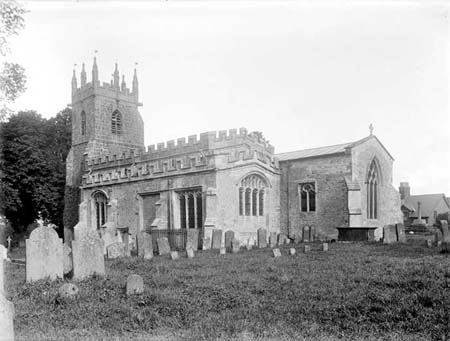
St James's Church, Somerton — photographed in the early twentieth century and unchanged in its essentials since the fifteenth.

The people behind this project
"There are people you meet in life who leave a permanent mark — not through grand gestures, but through the quality of their attention."
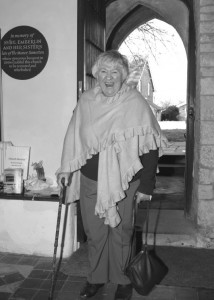
Rosemary Arnold has spent decades researching and recording the history of Somerton. She was the village librarian, ran the Beetle Drives, started the Saturday coffee mornings, and is — as anyone in the village will tell you — the person who knows. This site exists because of her.
Alice Bowmaker contributed equally: a schoolteacher who took children to the churchyard to take rubbings from the headstones, who mapped the village, and who answered questions that most people didn't think to ask.
The site is compiled and edited by Della Paviour, who grew up in Somerton.
About the project →